

NRF 2026: What Stuck With Me (After the Noise Faded)

There’s the NRF that happens on the stages. There’s the NRF that happens on the show floor. And then there’s the NRF that happens in the margins - between meetings, inside conversations, in the quiet moments when patterns start to emerge.
All three matter. But this year, it was in those in-between moments where the throughlines became clearest.
Yes, there was AI. Yes, there was retail media. Yes, there were bold ideas and ambitious visions. But this year felt different. The conversation wasn’t just about what could be done - it was about what is being done, what’s working, and what’s ready to scale.
The industry doesn’t feel like it’s hesitating.
It’s not slowing down.It’s not pulling back.And it’s not inching forward cautiously.
It feels ready to step forward more boldly - informed by real-world progress, grounded in lessons from those already succeeding, and increasingly willing to move beyond copying best practices toward making deliberate, confident bets of its own.
Here are the twelve signals that stayed with me after the lights dimmed and the calendar started pulling us back toward reality.

1. AI Is Becoming the Infrastructure (and That’s a Good Thing)
Last year, I was fairly direct with my observations.
By NRF 2025, artificial intelligence had moved beyond novelty and into day-to-day operations — smart shopping carts, cross-data synthesis, digital twins, predictive analytics, personalization at scale. Agentic AI was just beginning to enter the mainstream conversation, and the message was simple: if you were still debating whether AI mattered, you were already late.
That context matters, because NRF 2026 didn’t feel like a reset. It felt like the next chapter.
What struck me most this year wasn’t the volume of AI on display. It was how little anyone felt the need to justify its existence. There was far less selling the idea of AI, and far more discussion about where it lives, how it integrates, who governs it, what it costs, and how organizations adapt around it.
That’s a meaningful shift.
AI isn’t the infrastructure yet — but it is clearly becoming part of it. Less a standalone capability and more a connective layer running through planning, operations, decision-making, and customer engagement. The conversation has moved from “look what we can do” to “here’s how this actually fits into the business.”
And importantly, the framing has matured.
This wasn’t about replacing humans. It was about removing friction. Compressing the distance between insight and action. Taking routine, low-value tasks off people’s plates so they can spend more time doing what only humans can do — exercising judgment, building relationships, and solving ambiguous problems.
That distinction showed up again and again.
As Satya Nadella has said, “AI is becoming the copilot for everything we do.” Not the pilot. The copilot.
That idea resonates because it mirrors what many leaders are actually trying to build: systems that augment decision-making, not obscure it; tools that increase confidence, not complexity.
At NRF this year, AI felt less like an innovation story and more like an operating model conversation — how work gets done, how teams are supported, and how organizations scale without breaking their culture or their people.
And that’s a good thing.

2. The Human Side of Retail Wasn’t a Side Note - It Was the Point
What struck me early at NRF 2026 was who set the tone.
The opening keynotes from Ed Stack, Ryan Reynolds, and Gary Vaynerchuk couldn’t have been more different in style, yet they converged on the same idea: retail’s advantage isn’t found in copying playbooks or chasing what worked for someone else. It’s found in knowing who you are, taking risks that align with that identity, and treating customers with respect for their intelligence, time, and money.
That framing mattered, especially at a show dominated by conversations about AI, autonomy, and scale.
None of them argued against technology. In fact, the opposite. Their message was that technology only works when it serves something human. Creativity. Judgment. Taste. Courage. The willingness to stand apart instead of blending in.
What kept surfacing was the idea that customers aren’t passive. They’re discerning.
They know when they’re being manipulated, optimized, or treated like a metric. And in an environment where attention is scarce and options are endless, asking for engagement without offering genuine value is a losing strategy.
That’s why this year felt different. The conversation wasn’t about being louder or faster. It was about being worth it.
As AI becomes more embedded and more invisible, the risk isn’t that retail becomes too technical. The risk is that it becomes too efficient at the expense of meaning. The keynotes pushed back on that. They reminded us that efficiency scales sameness just as easily as it scales excellence.
That perspective showed up again later in the week when Artemis Patrick said:
“I am not sure I’ll ever see a world where people aren’t going to want to come in and touch and play… brick-and-mortar is here to stay.”
That wasn’t nostalgia. It was clarity.
NRF 2026 didn’t signal a retreat from innovation. It reinforced a guardrail: technology is an enabler, not the strategy. The brands that will win aren’t the ones that automate the most. They’re the ones that use technology to amplify what makes them human, distinctive, and intentional.
And that human-first framing set the context for everything else that followed.

3. From Chatbots to Agentic Commerce - Capability Has Arrived, Judgment Is Catching Up
Last year, the language around AI was already shifting.
Artificial intelligence wasn’t being discussed as a future concept or a buzzword anymore; it was embedded in how retailers were beginning to operate. Smart shopping carts. Cross-data synthesis. Digital twins. Predictive analytics. Personalization at scale.
And then a new phrase started to surface more consistently: Agentic AI — systems capable of performing regularly assigned tasks autonomously.
At the time, that felt like a line on the horizon.
At NRF 2026, it felt much closer.
We have clearly moved past the “chatbot phase.” The conversation this year wasn’t about AI responding to questions. It was about AI taking initiative — proactively making decisions, adjusting inventory, optimizing pricing, negotiating with supplier systems, and acting across connected workflows without waiting for human prompts.
That’s a meaningful leap.
Agentic commerce represents a shift from assistive technology to autonomous capability. From tools that support decisions to systems that begin to make them. And while the technology is advancing quickly, what stood out this year was not unbridled excitement — it was a growing awareness of responsibility.
The most thoughtful conversations weren’t asking can we do this. They were asking where, when, and under what guardrails should we let machines act on our behalf.
Because autonomy changes the nature of accountability.
When an agent optimizes a shelf, reprioritizes fulfillment, or adjusts a promotion in real time, the question isn’t whether the math works. It’s whether the outcome aligns with brand intent, customer trust, and operational reality. Those aren’t technical questions.
They’re human ones.
That’s why this signal connects directly back to the human framing that opened the show. As systems become more capable, leadership becomes more important — not less. Someone still has to decide what success looks like, where boundaries live, and when efficiency should yield to judgment.
Agentic AI may be the most powerful evolution in commerce technology we’ve seen in years. But NRF 2026 made something clear: the winners won’t be the retailers who turn it on everywhere all at once. They’ll be the ones who introduce autonomy deliberately, transparently, and in service of something larger than optimization alone.
In other words, the era of agentic commerce isn’t about handing over the keys.
It’s about deciding, very carefully, when to let go of the wheel — and when not to.
4. Unified Commerce Isn’t a Buzzword Anymore - It’s the Price of Entry
Last year, I questioned whether we could finally retire some tired language.
Omnichannel. E-commerce. Digital versus store.
The terms had become so embedded in how we talk about retail that they were starting to obscure the real issue. We weren’t debating channels anymore — we were struggling with expectations.
That’s why I jotted down a comment from Shirley Gao of PacSun during NRF 2025. She said, plainly and without theatrics:
“Delivering frictionless selling and personalized retail experiences is essential in meeting the demands of today’s savvy consumers.”
It stuck with me because it cut through the noise. Not because it introduced a new concept, but because it named the reality customers were already living in. This wasn’t about technology stacks or channel strategy. It was about whether the experience felt coherent — whether the brand showed up as one brand, not a collection of disconnected systems.
NRF 2026 made it clear; Shirley's sentiment in 2025 is no longer a philosophical debate.
Unified commerce wasn’t being pitched as a differentiator this year. It was treated as a prerequisite. Across discussions on AI, agentic systems, retail media, fulfillment, and loyalty, the assumption was the same: fragmented systems are now the primary constraint to progress.
AI doesn’t stumble because it lacks intelligence. It stumbles because the data beneath it is fractured. Agentic systems don’t fall short because autonomy is flawed. They fail when the underlying architecture can’t support real-time, cross-functional decision-making.
What’s changed is the urgency.
Retailers making real progress — especially those investing deeply in understanding Gen Z and now Gen Alpha — aren’t talking about driving traffic to channels. They’re focused on collapsing seams. Creating a single source of truth that allows the brand to recognize the customer, retain context, and behave consistently regardless of where engagement begins or ends.
That’s the bar now.
And it raises an uncomfortable but necessary question: is this the year we stop congratulating ourselves for isolated channel growth and start holding ourselves accountable for overall growth, sustained loyalty, and confidence across the entire experience?
Unified commerce isn’t about simplification for its own sake. It’s about enabling everything else to work as intended. As autonomy increases and systems take on more responsibility, this foundation becomes non-negotiable.
NRF didn’t position unified commerce as the destination.
It positioned it as the starting line.

5. Retail Media Has Moved from Monetization to Accountability - and the Next Frontier Is the Store
Last year, retail media was still being framed primarily as opportunity.
Retail Media Networks were redefining how retailers engage customers and drive profit — turning owned platforms into powerful monetization engines and integrating brand messages closer to the point of purchase. Much of that momentum was being driven by the scale and sophistication of Amazon and Walmart, with the expectation that the model would continue to expand across the industry.
That framing wasn’t wrong. It was just early.
NRF 2026 marked a clear shift in tone. Retail media is no longer being discussed as a side business or an incremental revenue layer. It’s being treated as a real media channel — and with that comes accountability.
The conversation has moved past does it work to how does it work at scale. Brands are pressing for consistency, transparency, and planning models that look more like mature media ecosystems and less like bespoke experiments. Incrementality matters.
Measurement matters. And increasingly, governance matters.
What also became clear this year is where the growth frontier sits.
Retail media is moving decisively beyond websites and apps and onto the store floor.
NRF Retail Media programming spent meaningful time on in-store media as a system — not just screens, but context-aware environments where messaging, inventory, pricing, and loyalty signals can align in real time. When media lives inside the physical experience, relevance isn’t optional. Misalignment shows up immediately.
That evolution raises the bar.
In-store media can’t be treated as digital signage or leftover real estate. It requires the same discipline retailers apply to merchandising and pricing — because now the message is delivered at the moment of truth, not upstream.
What tied these conversations together was data. Without unified commerce — a single source of truth across inventory, customer behavior, and fulfillment — retail media quickly degrades into noise. The promise of relevance collapses when the foundation underneath it isn’t aligned.
NRF 2026 made one thing clear: retail media has entered its accountability era, and in-store media is where that accountability will be tested most visibly.
The winners won’t be the retailers who add the most placements. They’ll be the ones who treat retail media as part of the experience — monetizing attention without eroding trust.

6. The Power of the 1% – Small Gains, Real Leverage
There was an underlying realism to NRF 2026 that felt different from past years.
Costs are going to go up. That’s not a projection — it’s a fact. Labor, raw materials, transportation, compliance, global uncertainty. None of that is trending in a direction that makes margin management easier. And despite years of speculation, we’re not heading into a future where humans are replaced wholesale. Retail remains, at its core, a people business.
Those two truths change the conversation.
If costs are rising and people remain central, the path forward isn’t radical efficiency alone. It’s value creation — and that increasingly lives in experience.
That’s where the idea of the Power of the 1% surfaced repeatedly, particularly in analytics and innovation discussions. The framing was simple but powerful: for many retailers, converting just one additional shopper out of every hundred already in the store can be more profitable than chasing the next big acquisition campaign.
That insight feels right, especially now.
When product costs rise, incremental gains matter more. When attention is scarce, relevance matters more. And when customer trust is fragile, improving the experience by even a small margin can compound meaningfully over time.
This isn’t about squeezing people harder or asking associates to do more with less. It’s about using data more intelligently — understanding friction points, recognizing intent, and removing obstacles that quietly erode confidence.
The Power of the 1% isn’t a metric. It’s a mindset. A way of asking whether better experiences can create more value, whether smarter analytics can help us make fewer wrong decisions, faster, and whether we can create environments where customers feel understood rather than optimized.
NRF 2026 didn’t present this as a silver bullet. But it did reinforce something important: in an era of rising costs and human-centered retail, small improvements — applied consistently — may be the most sustainable lever we have.
I’ll come back to this idea at the close, because it connects many of the signals we’ve been discussing. For now, it’s worth holding onto.
Sometimes the biggest shifts don’t come from chasing the next 10%.
They come from respecting the power of the first 1%.
7. From Supply Chain Resilience to Value Recovery – NRF Rev Changed the Frame
If the Power of the 1% is about finding leverage in small, compounding improvements, NRF 2026 offered a very practical answer to where that leverage lives.
Last year, the supply chain conversation centered on resilience — and for good reason.
In an era defined by disruption, flexibility had become the new currency. Automation, robotics, AI, and digital twins were helping retailers simulate warehouse layouts, stress-test freight routes, and adapt faster to the unexpected. The goal wasn’t just efficiency. It was survival with options.
That framing still holds. But NRF 2026 pushed it further.
What changed this year was the lens. Resilience is no longer just about keeping product moving forward. It’s about what happens when product comes back.
The launch of NRF Rev made something explicit that had been quietly building: reverse logistics is no longer a cost center to be minimized. It’s a value stream to be managed.
Returns, refurbishment, resale, redistribution — these aren’t edge cases anymore.
They’re becoming core operating capabilities. AI-driven routing, automated inspection, and smarter decisioning are allowing retailers to determine, in near real time, whether a returned item should be restocked, redirected, resold, repaired, or recycled.
That’s not just operational hygiene. That’s strategy.
As Scot Case put it during NRF Rev:
“Someone’s unwanted product is someone else’s treasure… there is hidden revenue in what comes back.”
That quote stuck because it reframes the entire problem. Returns aren’t just leakage. They’re inventory in the wrong place, at the wrong moment, with the wrong decision applied to them.
This is where resilience evolves into recovery.
Supply chains that can adapt forward are important. Supply chains that can recover value on the return journey are differentiators. Especially in an environment where product costs are rising — raw materials, labor, transportation, and broader global economic pressures — squeezing more value out of what already exists isn’t optional.
It’s pragmatic.
NRF 2026 made it clear that the next phase of supply chain leadership won’t be defined solely by speed or flexibility. It will be defined by intelligence — the ability to make better decisions across the full lifecycle of a product.
Resilience helped retailers survive uncertainty.
Value recovery is what will help them thrive within it.

8. Trust, Identity, and Privacy – Will Personalization Be Assumed or Earned?
As NRF 2026 unfolded, one tension kept resurfacing beneath conversations about AI, media, analytics, and experience.
Trust.
As systems become more capable and more connected, the question isn’t whether personalization is possible. It’s whether it will be accepted — and under what terms.
For years, personalization has largely been treated as a given. If the data exists and the technology can act on it, the assumption has been that customers will comply in exchange for convenience. But NRF 2026 suggested that assumption is starting to fray.
What’s changing isn’t consumer appetite for relevance. People still want experiences that feel tailored, timely, and useful. What’s changing is tolerance for opacity. Customers increasingly want to understand what data is being used, how it’s being applied, and what they get in return.
That reframes personalization from a technical capability into a value exchange.
The most thoughtful conversations weren’t about maximizing data capture. They were about minimizing intrusion. Privacy-first architectures, on-device processing, and edge intelligence were discussed not just as compliance strategies, but as trust strategies — ways to deliver relevance without extracting more than is necessary.
This is where identity becomes delicate.
Retailers want continuity. They want to recognize customers across moments and touchpoints. Customers want control. They want to decide when they’re known, how much they’re known, and when anonymity is preferable to convenience.
That tension isn’t going away.
The question NRF 2026 quietly raised is whether personalization will continue to be something brands assume — or whether it becomes something that must be earned, moment by moment, through transparency and choice.
Trust operates very much like the Power of the 1%. It’s rarely lost all at once. It erodes through small moments of misalignment — a recommendation that feels invasive, an offer that arrives without context, a system that remembers too much and explains too little.
And once trust slips, efficiency doesn’t save you.
What felt different this year is that leaders are starting to acknowledge this tradeoff openly. The future of personalization may not belong to the brands with the most data, but to those who are most disciplined about how and when they use it — and most willing to give customers agency in the process.
As systems grow more intelligent, restraint may become a competitive advantage.
NRF 2026 didn’t resolve this tension. But it made one thing clear: trust, identity, and privacy are no longer peripheral concerns. They are now core design inputs — and the brands that treat them that way will earn more than compliance.
They’ll earn confidence.
9. Search Is Shifting from Ranking to Relevance
For a long time, search in retail was treated as a technical problem to be optimized.
Keywords. Rankings. Placement. Who shows up first.
NRF 2026 suggested that frame is breaking down.
What’s emerging instead is a shift from ranking to relevance — from lists of results to contextual answers grounded in intent, trust, and credibility. Search is becoming less about visibility and more about usefulness.
That shift showed up clearly in conversations with leaders from Abercrombie & Fitch and Lowe’s, where the emphasis wasn’t on gaming algorithms but on understanding what customers are actually trying to accomplish in a given moment. Search is increasingly conversational, situational, and expectation-driven.
As Samir Desai put it:
“Data quality has never been more important… it’s about the quality of the attributes that feed the prompts.”
That line matters because it reframes the problem. In a world where AI-driven and conversational search surfaces answers, not links, relevance is only as good as the underlying data. If product attributes are incomplete, inconsistent, or disconnected from real customer intent, no amount of optimization fixes the experience.
This is where search, trust, and unified commerce converge.
Customers aren’t just asking what’s available. They’re asking what’s right for me, what works in this situation, what do you recommend, and why. Those are judgment-based questions, not keyword matches.
And relevance carries risk.
If a result feels off, overly promotional, or misaligned with context, it doesn’t just fail — it erodes confidence. Search becomes another moment where personalization is either earned or rejected.
NRF 2026 made it clear that the future of search won’t be won by whoever ranks first. It will be won by whoever answers best — with clarity, restraint, and credibility.
In that sense, search is no longer a traffic driver alone. It’s a trust mechanism.
And as customers increasingly rely on AI-mediated answers, the brands that invest in clean data, clear intent, and honest relevance won’t just be easier to find.
They’ll be easier to believe.
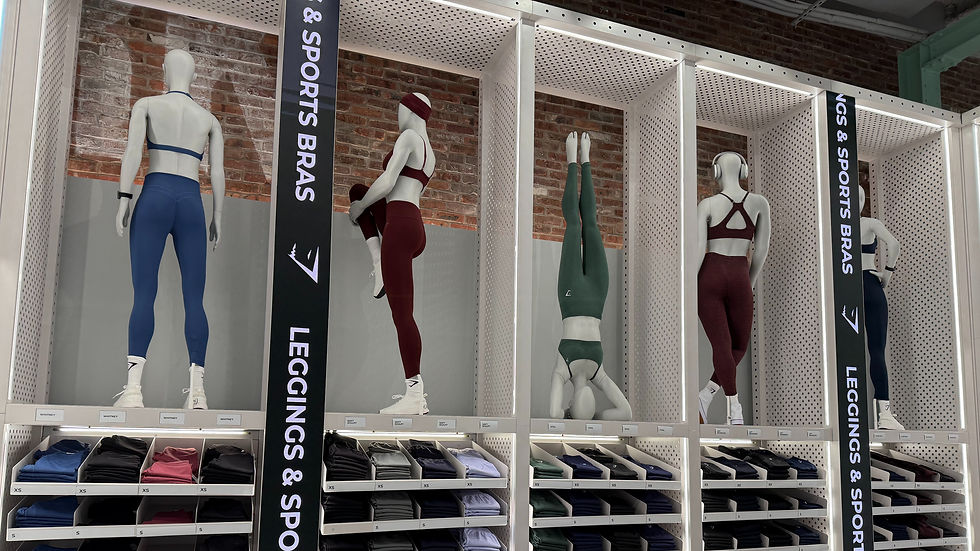
10. Marketplaces as the New Department Stores? Maybe. But Curation Still Wins.
There’s an obvious temptation to turn every NRF conversation about marketplaces into a referendum on the future of the department store.
I’m not going to do that.
Macy’s appears to be finding traction again.
JCPenney continues to face widening challenges.
Saks Fifth Avenue moves forward amid uncertainty, with the weight of Neiman Marcus and Bergdorf Goodman names tied into that narrative.
Others can debate what ultimately survives, merges, or disappears.
What NRF 2026 made clearer — especially in roundtables and hallway conversations — is that the function department stores once served is being reimagined, not eliminated. And marketplaces are playing a growing role in that evolution.
The most thoughtful marketplace discussions weren’t about infinite assortment or asset-light expansion for its own sake. They were about controlled breadth — expanding choice without diluting trust.
Retailers like Best Buy, Nordstrom, and Target talked less about “third-party sellers” and more about ecosystems. Curated environments where the retailer still plays the role of editor, not just landlord.
That distinction matters.
The original department store wasn’t powerful because it carried everything. It was powerful because it helped customers navigate choice. It curated assortments, contextualized brands, and offered confidence through selection. When that role eroded, so did trust.
Marketplaces that succeed will rediscover that responsibility.
What NRF reinforced is that customers aren’t asking for endless options. They’re asking for relevant ones. And relevance at scale requires discipline — governance, standards, and a willingness to say no as often as yes.
This also loops back to trust.
When a retailer extends its brand to third-party assortments, it’s extending its reputation. Poor curation doesn’t feel like a marketplace failure. It feels like a brand failure. That’s why the retailers approaching marketplaces most carefully are treating them less as revenue shortcuts and more as long-term trust investments.
So are marketplaces the new department stores?
Maybe structurally. But not philosophically.
The winners won’t be defined by how many sellers they onboard. They’ll be defined by how well they curate, contextualize, and protect the customer experience — the very role great department stores once played at their best.
And in that sense, what’s old may not be dying.
It may simply be being re-learned.

11. Circularity, Resale, and Repair – From Ideology to Economics
Circularity wasn’t new at NRF 2026, but the tone around it was.
In prior years, the conversation often leaned heavily on aspiration — sustainability commitments, regulatory pressure, long-term responsibility. Important, but sometimes abstract. This year felt more pragmatic. Less ideology. More economics.
Retailers aren’t talking about circularity as a future-facing experiment anymore. They’re talking about it as a stabilizing force.
Companies like IKEA and UNIQLO highlighted repair-first design, buy-back programs, and resale models not just as brand statements, but as operational strategies. Ways to extend product life, smooth supply volatility, and create value without relying solely on new production.
What struck me is that the drumbeat felt quieter — and more serious.
The emphasis wasn’t on regulation or moral obligation. It was on behavior and economics. On meeting customers where they already are, especially younger consumers who increasingly view ownership as flexible and value as something that evolves over time.
Circularity, in this framing, isn’t about asking customers to sacrifice. It’s about giving them options — to repair instead of replace, to resell instead of discard, to participate in a system that feels both practical and responsible.
This ties directly back to the Power of the 1%.
When costs rise and supply chains remain fragile, extracting more value from what already exists isn’t just sustainable — it’s smart. Circular models don’t require massive behavioral leaps. They rely on small shifts, applied consistently, that compound over time.
NRF 2026 suggested that circularity is no longer a side program or a marketing message. It’s becoming part of the core operating model — quieter, more integrated, and more durable because of it.
12. Identity, Control, and the Final Question of Trust
If there was one tension running quietly beneath nearly every NRF 2026 conversation, it was this: who ultimately controls the relationship?
As personalization deepens, systems become more intelligent, and experiences feel increasingly seamless, the balance between brands and customers is shifting — and not always in ways retailers fully control. For years, identity was something largely assumed. Loyalty programs, cookies, device IDs, behavioral tracking — participation was often implicit, and the value exchange was convenience. Most customers accepted the trade.
That assumption is weakening.
What surfaced this year wasn’t resistance to personalization, but skepticism about how it’s earned. Customers still want relevance. They still value experiences that feel tailored and useful. What they’re questioning is opacity — what data is being used, how it’s being applied, and whether the benefit truly flows both ways.
That reframes personalization from a technical capability into a trust-based exchange.
Several conversations pointed toward privacy-first approaches not as compliance checkboxes, but as strategic choices. On-device processing, edge intelligence, and clearer consent models were discussed as ways to deliver relevance without overreach — to know just enough, not everything.
The unresolved question NRF 2026 raised is whether personalization will remain something brands assume, or whether it becomes something that must be earned moment by moment through transparency, restraint, and choice.
Trust, after all, rarely breaks in dramatic fashion. It erodes quietly — through a recommendation that feels invasive, an offer that arrives without context, or a system that remembers too much and explains too little. And once trust slips, efficiency doesn’t restore it.
What felt different this year is that more leaders are acknowledging this tension openly. Identity, privacy, and control are no longer peripheral concerns. They are now core design inputs, shaping how experiences are built from the inside out.
In that sense, NRF 2026 brought the entire conversation full circle. AI as infrastructure. Humanity as the guardrail. Small gains over sweeping promises. Value recovered as much as value created. Relevance over volume. Curation over excess.
The future of retail may hinge less on what technology can do, and more on what brands choose not to do — how much control they’re willing to give back, how transparent they’re willing to be, and how deeply they respect the intelligence of the customer on the other side of the exchange.
That may be the hardest work ahead.
It may also be the most important.

Voices That Framed the Week
As part of the NRF Retail Voices program this year, I had the opportunity to lean in more and dig deeper. Not just to listen, but to compare perspectives — to pressure-test my own observations against what others were seeing and hearing. Through conversations with my RETHINK Retail tribe, I was able to experience NRF through multiple vantage points at once.
It raised an honest question for me.
Was the conversation truly evolving — or was I simply paying closer attention?
What convinced me it was the former were the throughlines that emerged from very different voices, delivered from very different stages.
Ed Stack spoke candidly about the inspiration behind House of Sport — not as a growth gimmick, but as a deliberate effort to obsolete Dick’s before competitors could. That kind of thinking isn’t defensive. It’s self-disruptive. It assumes that standing still is the riskiest move of all.
Ryan Reynolds, in his own way, delivered a similar challenge. If you’re not playing with the goal of getting to the Premier League, why are you playing at all? The message wasn’t about scale for scale’s sake. It was about intent — ambition rooted in clarity, not noise.
Ben Francis reinforced that idea from a different angle, emphasizing restraint over expansion. Resisting the urge to over-assort, over-expand, or chase every adjacent opportunity. Focus and curation, not accumulation, were the discipline that mattered most.
Then there was Emma Grede, who spoke about building SKIMS and Good American without obsessing over trends — or even paying much attention to them at all. The goal wasn’t to follow momentum. It was to set it. To understand the customer deeply enough that trend-watching became irrelevant.
Even Gary Vaynerchuk, often associated with speed and volume, kept returning to fundamentals — patience, relevance, and actually respecting the intelligence of the audience rather than trying to out-hack it.
Different voices. Different styles. The same underlying message.
To borrow one of Ed’s baseball metaphors: if legacy brands are hugging first base, the retail winners are the ones willing to take a bigger lead — not recklessly, but confidently. Acknowledging the risk. Reading the play. Understanding that standing frozen on the bag may feel safe, but it isn’t a long-term strategy.
There were others reinforcing this shift as well. Deb Weinswig consistently brought the conversation back to signals over hype — what consumers are actually doing versus what the industry wants to believe. And Brieane Olson, in discussing Gen Z and Gen Alpha, underscored that these cohorts aren’t impressed by excess or performance theater. They’re drawn to clarity, authenticity, and brands that know when not to push.
Taken together, these weren’t just inspirational moments. They were directional signals.
NRF 2026 didn’t feel like an industry chasing the next shiny thing. It felt like one quietly recalibrating — more willing to place thoughtful bets, more comfortable saying no, and more focused on earning attention rather than demanding it.
And in many cases, more willing to take a few steps farther than normal — not recklessly, but intentionally — understanding that staying too close to first base may feel safe, but it rarely wins the game.
Maybe I was paying closer attention this year.
But more likely, the conversation itself has finally caught up to what many of us have been sensing for a while.
As always, these reflections are mine - drawn from a career spent learning, leading, teaching, and studying the evolving world of retail and the people who shape it. Feel free to pass along your thoughts on this topic.


Comments